
5 Ways to Preserve Fruits & Vegetables: Build Your Pantry, Grow Your Food Sovereignty
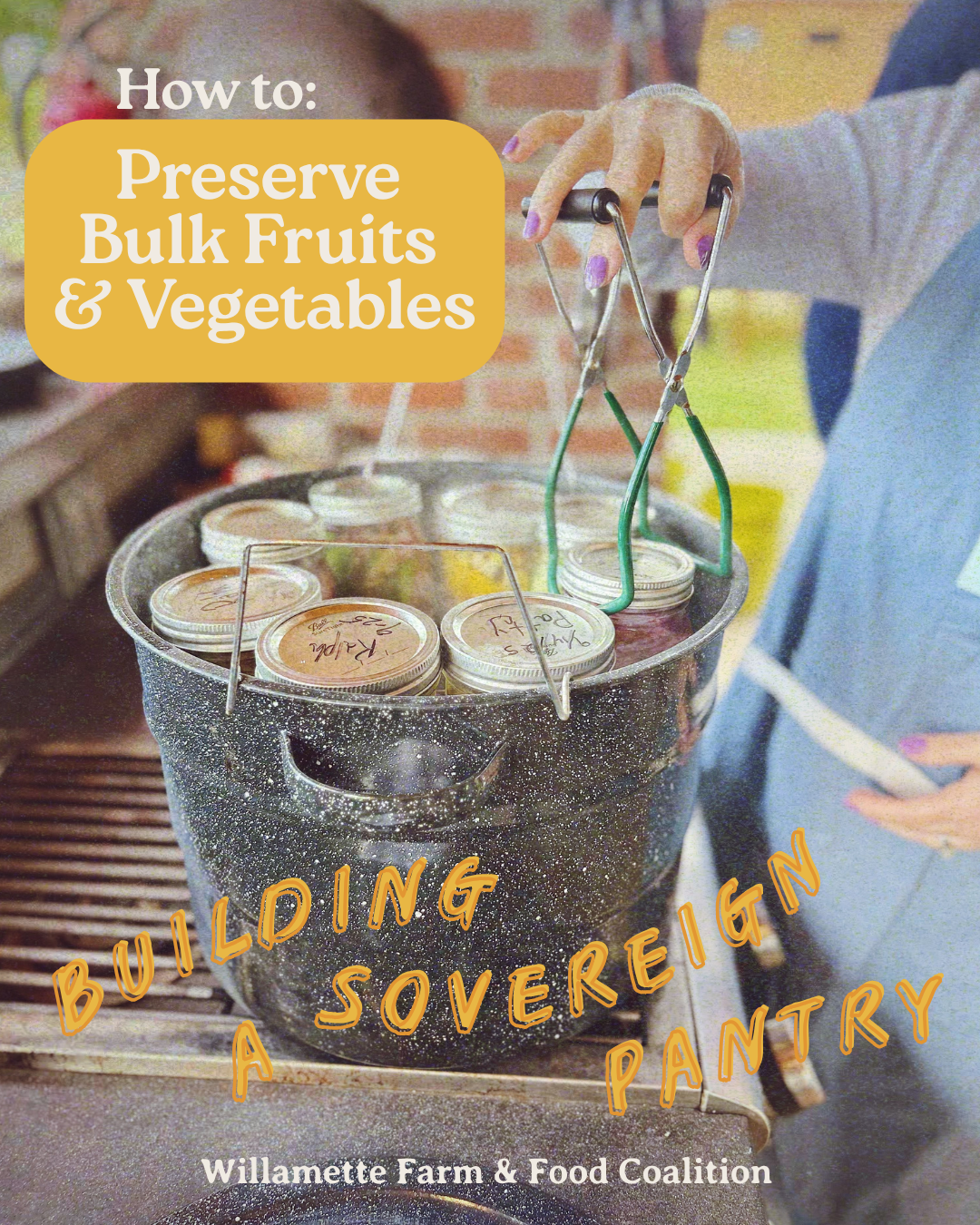
A little preparation today means more locally grown food on your table all year long!
Buying fruits and vegetables directly from local farmers is a wonderful way to support our regional food system. And when you purchase in bulk during the harvest season, learning how to safely preserve your food can help you save money, reduce food waste, and enjoy seasonal produce long after the growing season ends.
From freezing summer berries to fermenting cabbage and storing winter squash, preserving food doesn't have to be complicated! There are plenty of ways to make the most of your harvest, whether you're just getting started or have been putting food away for years.
Here are five ways to preserve your fruits and vegetables, along with free food preservation resources from Oregon State University Extension.
1. Pickling
Pickling is a wonderful way to turn fresh vegetables into tangy, flavorful pantry staples! Cucumbers, carrots, green beans, beets, and peppers are just a few of the vegetables that can be pickled.
You can make quick refrigerator pickles for short-term storage or use tested canning recipes to make shelf-stable pickles that can be enjoyed throughout the year.
OSU Extension Resource:
Pickling Vegetables
2. Freezing
Freezing is one of the easiest and most accessible ways to preserve seasonal fruits and vegetables.
Berries, peaches, corn, green beans, and leafy greens can all be frozen for later use in soups, smoothies, baked goods, and everyday meals.
Most vegetables benefit from blanching before freezing to maintain their color, flavor, and quality. Proper packaging also helps prevent freezer burn.
OSU Extension Resource:
Freezing Fruits and Vegetables
3. Dehydration
Drying fruits and vegetables removes moisture, making them easier to store while concentrating their natural flavors.
Think dried apple rings, tomatoes, mushrooms, peppers, and herbs! Dehydrated foods take up less storage space and can be wonderful additions to soups, stews, trail mixes, and homemade spice blends.
A food dehydrator is helpful, but some foods can also be safely dried using an oven or other appropriate methods.
OSU Extension Resource:
Drying Fruits and Vegetables
4. Fermentation
Fermentation is a traditional food preservation practice that uses beneficial microorganisms to transform fresh vegetables into flavorful fermented foods.
Sauerkraut, kimchi, and fermented carrots are just a few examples of what you can make with seasonal produce.
Fermentation is also a wonderful way to reconnect with food traditions and learn skills that have been passed down through generations and across cultures.
Safe fermentation requires the right salt concentration, temperature, and handling practices. Many fermented foods require refrigeration after fermentation.
OSU Extension Resource:
Small Batch Sauerkraut
Kimchi Basics
5. Cold Storage
Not every fruit or vegetable needs to be canned, frozen, or dried!
Many storage crops can stay fresh for weeks or even months when kept under the right conditions.
Winter squash, potatoes, onions, garlic, apples, carrots, and cabbage are all great examples of produce that can be stored for later use.
Different crops need different temperatures, humidity levels, and ventilation, so learning how to store each one properly can make a big difference in how long your harvest lasts.
OSU Extension Resource:
Home Food Safety and Storage
Preserving Food Is Part of Food Sovereignty
Learning how to preserve your own fruits and vegetables is an act of food sovereignty!
When we build the skills to store seasonal harvests, we gain greater control over our food supply, reduce our dependence on industrial food systems, and make locally grown food more accessible throughout the year.
Food preservation is also about keeping knowledge alive. These practices connect us to generations of growers, cooks, and community members who have shared the skills needed to nourish their families and neighbors.
By purchasing directly from local farmers, preserving what we can, and sharing our knowledge and abundance with others, we're helping build a regional food system rooted in relationships, resilience, and community care.
Fill Your Pantry for the Winter!
Want to put some of these preservation skills to use?
Fill Your Pantry 2026 is an opportunity to purchase locally grown fruits, vegetables, grains, beans, meats, and other pantry staples directly from regional farmers and food producers.
Whether you're stocking up on winter squash, buying apples to dehydrate, or picking up cabbage for your next batch of sauerkraut, Fill Your Pantry is a wonderful way to support local farms while preparing for the months ahead.
Pre-orders are open through October 31!
Pickup: Sunday, November 8, 2026
Time: 12–4 PM
Location: Lane Events Center Agricultural Pavilion, Eugene, Oregon
Participating farmers and food producers will continue adding and restocking products throughout October, so check back often!
Learn more about Fill Your Pantry, browse participating producers, and find information about Pantry Bucks and accessibility:
https://www.willamettefarmandfood.org/fillyourpantryfaq
Keep Learning: Free Food Preservation Resources
Oregon State University Extension offers free, research-based food preservation resources, including downloadable publications and instructions for canning, freezing, drying, fermenting, and storing food safely.
Explore OSU Extension's Food Preservation Resources:
https://extension.oregonstate.edu/food/preservation
Remember: Always follow research-tested preservation instructions. Not every preservation method is appropriate for every food, and safe preparation and storage practices matter.
Here's to full freezers, well-stocked pantries, shared harvests, and keeping local food on our tables all year long!
