

Building a Sovereign Pantry: What the Squash?!
Confused about what to do with all those funky-looking winter squashes at the farmers market? Don't let their warty skin, funny shapes, and unusual colors intimidate you! Some of the most delicious winter squashes are the ones we tend to walk right past because we're not quite sure what to do with them.
Here in the Willamette Valley, we're fortunate to have local farmers growing an incredible diversity of winter squash. From sweet little honeynuts to giant, bumpy Blue Hubbards, each variety has its own unique flavor, texture, and culinary uses.
Winter squash is also one of our favorite crops for building a sovereign pantry. It's versatile, nourishing, and, depending on the variety, can be stored for months without refrigeration or complicated food preservation equipment.
So, let's get to know a few of our favorites!
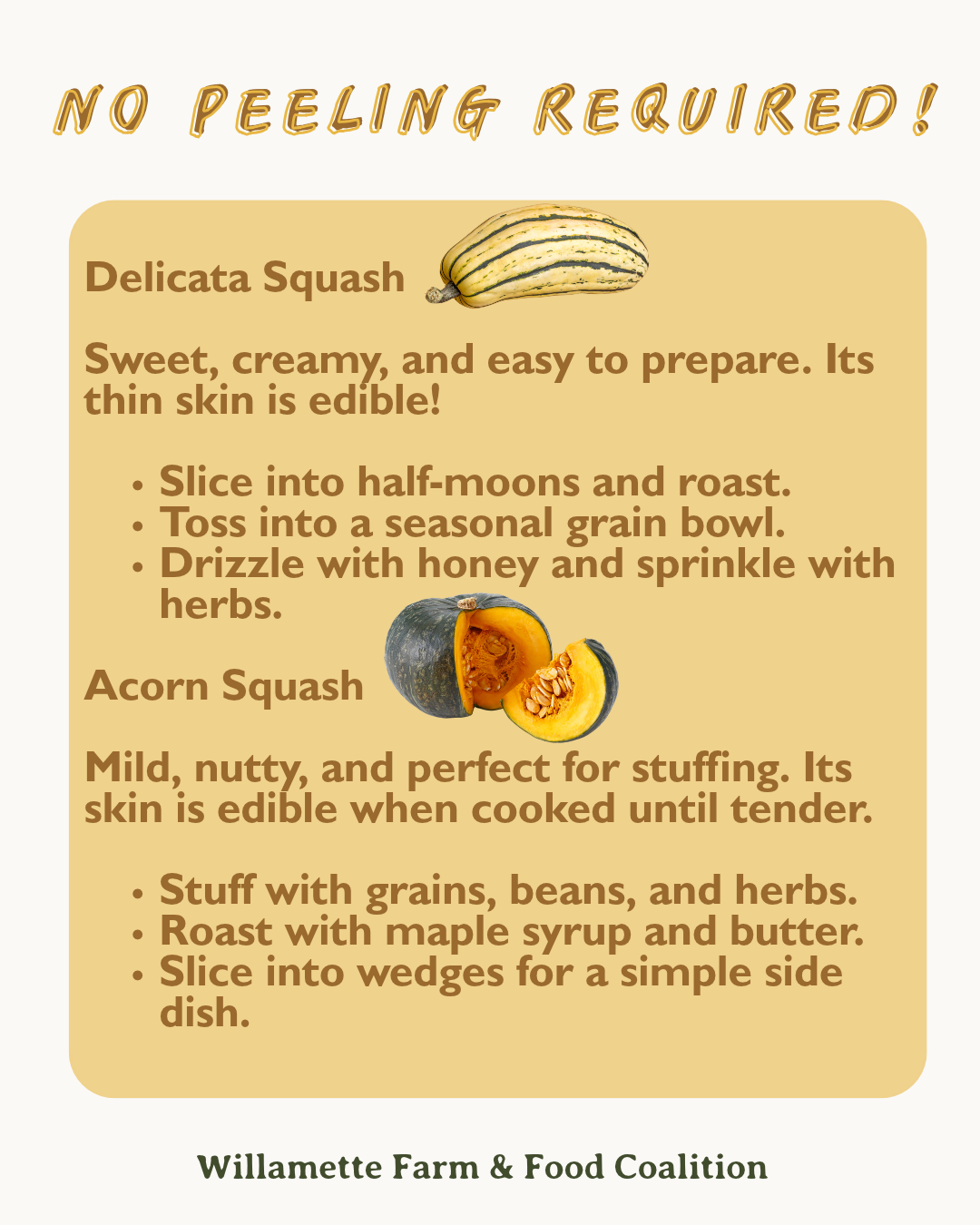
No Peeling Required!
Delicata Squash
Sweet, creamy, and easy to prepare, delicata is a wonderful squash to start with if you're new to cooking winter squash. Its thin, edible skin means there's no need to wrestle with a vegetable peeler!
A few of our favorite ways to enjoy it:
Slice into half-moons, toss with olive oil, and roast.
Add to a seasonal grain bowl with beans and winter greens.
Drizzle with local honey and sprinkle with your favorite herbs.
Toss roasted slices into a salad with toasted hazelnuts.
Acorn Squash
Mild, slightly nutty, and conveniently shaped like its own little serving bowl, acorn squash is perfect for stuffing. Its skin is also edible when cooked until tender.
Try it a few different ways:
Stuff with grains, beans, mushrooms, and herbs.
Roast with maple syrup and butter.
Slice into wedges for a simple seasonal side dish.
Fill with leftover grains and vegetables for an easy weeknight meal.
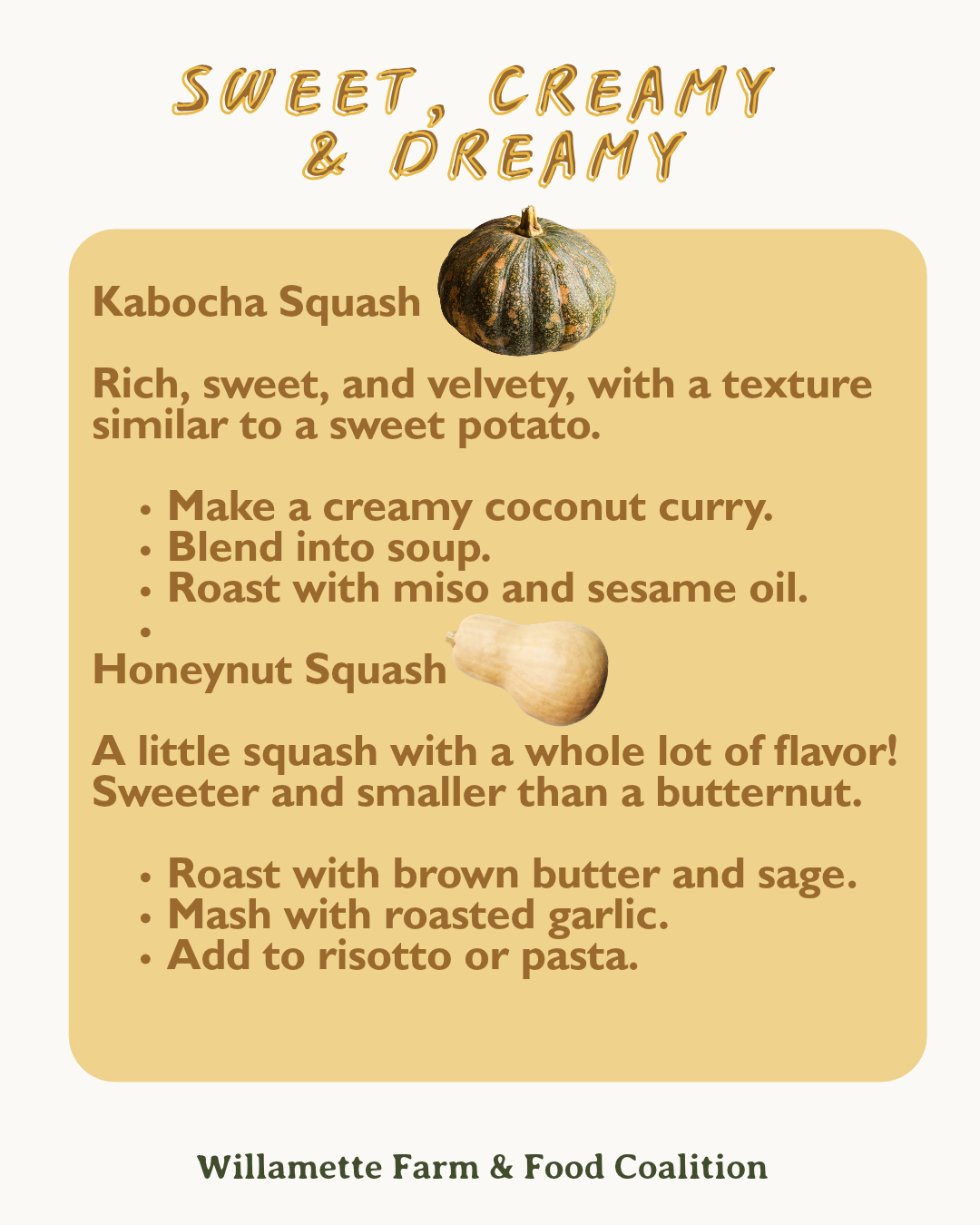
Sweet, Creamy & Dreamy
Kabocha Squash
Sometimes referred to as Japanese pumpkin, kabocha is rich, sweet, and velvety, with a texture similar to a sweet potato. Its dense flesh makes it especially wonderful for cozy winter meals.
Here are a few delicious ways to use it:
Make a creamy coconut curry.
Blend into a rich winter squash soup.
Roast with miso and sesame oil.
Mash with butter, garlic, and herbs.
Honeynut Squash
A little squash with a whole lot of flavor! Honeynut looks like a miniature butternut squash but has an especially sweet, concentrated flavor.
Its smaller size makes it perfect for cooking for one or two people.
Roast with brown butter and sage.
Mash with roasted garlic.
Add to risotto or pasta.
Roast and serve with lentils, greens, and a drizzle of tahini.
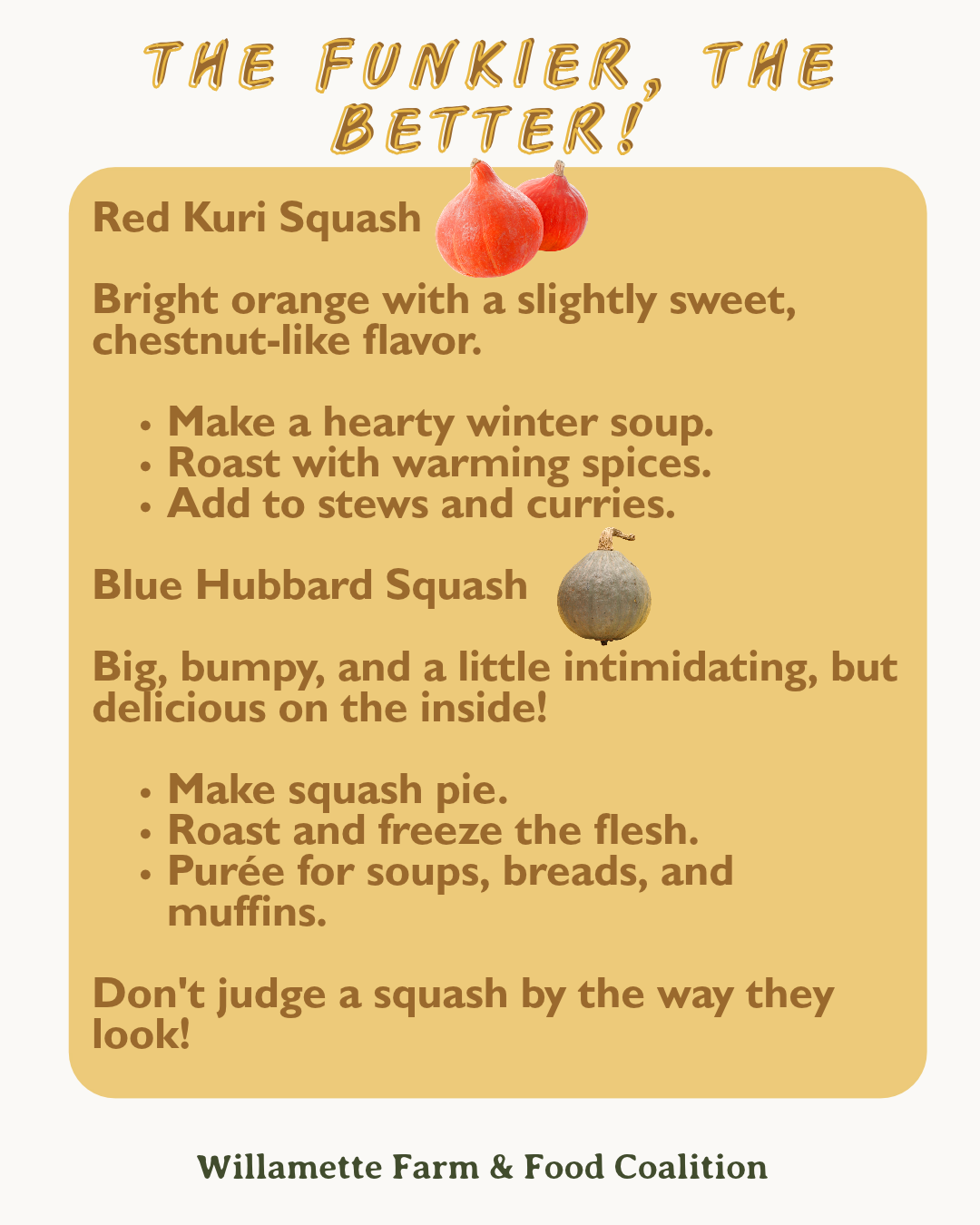
The Funkier, the Better!
Red Kuri Squash
With its bright orange skin and slightly sweet, chestnut-like flavor, red kuri is a beautiful addition to your winter pantry. Its skin becomes tender when cooked, and its creamy flesh lends itself to all sorts of delicious dishes.
Make a hearty winter soup.
Roast with warming spices like cumin, coriander, and cinnamon.
Add to stews and curries.
Purée into a creamy pasta sauce.
Blue Hubbard Squash
Big, bumpy, and a little intimidating, but absolutely delicious on the inside! Blue Hubbard is an excellent storage squash, making it a wonderful investment for your winter pantry.
Because of its size, it's also a great squash for batch cooking and food preservation.
Make a homemade squash pie.
Roast and freeze the flesh in meal-sized portions.
Purée for soups, breads, and muffins.
Use in place of pumpkin in your favorite baked goods.
Don't judge a squash!

Future You Loves a Full Pantry!
One of the wonderful things about winter squash is that you don't necessarily need to do anything to preserve it right away. Many varieties are naturally suited for long-term storage, allowing us to enjoy the abundance of the fall harvest well into the winter months.
A few tips for storing your winter squash:
Choose mature squash without soft spots, cracks, or damaged skin.
Store whole squash in a cool, dry, well-ventilated space, ideally around 50–55°F.
Avoid stacking squash too tightly together.
Check your squash regularly for signs of spoilage.
Use shorter-storing varieties, like delicata and acorn, first.
Save longer-storing varieties, like Blue Hubbard, for later in the winter.
Roast and freeze cooked squash for future meals.
And don't forget to roast those seeds! Toss cleaned squash seeds with a little olive oil, sea salt, and your favorite culinary spice blend for a delicious snack.
Building a sovereign pantry doesn't have to mean spending an entire weekend canning or purchasing expensive food preservation equipment. Sometimes, it's as simple as bringing home a few extra squashes from your local farmer, learning how to store them, and getting a little creative in the kitchen.

From Soil to Skillet: Roasty Toasty Winter Squash Soup
One roasting pan, a handful of ingredients, and a cozy bowl of soup. A delicious way to use those funky winter squashes!
This recipe is intentionally flexible, so use whatever winter squash you have on hand. You can even combine a few different varieties to experiment with flavors and textures.
Makes: Approximately 4–6 servings
Prep time: 15–20 minutes
Cook time: 40–55 minutes
Ingredients
2–3 lbs winter squash (butternut, honeynut, kabocha, or red kuri)
1 large onion, quartered
1 whole head of garlic
2 carrots, roughly chopped
2 tablespoons olive oil
1 teaspoon dried thyme or sage
3–4 cups vegetable broth
½ cup coconut milk or heavy cream
Salt and pepper to taste
Step 1: Chop It Up!
Cut your squash in half, scoop out the seeds, peel if needed, and chop into large chunks. Roughly chop your onion and carrots. Slice the top off your head of garlic to expose the cloves.
Set those squash seeds aside for roasting later!
Step 2: Toss It All Together
Place your squash, onion, carrots, and garlic in a roasting pan. Drizzle with olive oil and sprinkle with herbs, salt, and pepper. Wrap the head of garlic loosely in foil to prevent it from burning.
Step 3: Get Roasty Toasty
Roast at 400°F for 35–45 minutes, or until the squash is fork-tender and the vegetables are golden and caramelized.
Roasting brings out the natural sweetness of the squash and adds a wonderful depth of flavor to your soup.
Step 4: Blend It Up
Squeeze the roasted garlic out of its skin. Remove any remaining tough squash skin and transfer the roasted vegetables to a pot.
Add three cups of vegetable broth and blend with an immersion blender until smooth. Add more broth as needed to reach your desired consistency.
Step 5: Make It Cozy
Stir in your coconut milk or heavy cream and gently simmer for 5–10 minutes. Taste and adjust your seasonings.
Top with roasted squash seeds, crispy sage, toasted hazelnuts, or a drizzle of olive oil. Serve with a thick slice of locally made bread for an extra cozy winter meal.
Get Creative in the Kitchen!
Want to switch things up? Try adding:
Fresh ginger, turmeric, and coconut milk.
A spoonful of miso and a drizzle of sesame oil.
Roasted apples and a pinch of nutmeg.
White beans for extra protein and fiber.
Smoked paprika and roasted peppers.
Use what you have, experiment with flavors, and make it your own!
Sovereign Pantry Tip
Make a double batch and freeze individual portions for those chilly winter evenings when you don't feel like cooking. Cool the soup promptly, transfer it into freezer-safe containers, leave a little room for expansion, and label it with the date.
Future you will be grateful!
Building a Sovereign Pantry, One Squash at a Time
Building a sovereign pantry is about more than stocking our shelves. It's about developing the skills, knowledge, and relationships that allow us to feed ourselves, our families, and our communities throughout the changing seasons.
It's about getting to know our local farmers, understanding what grows in our region, celebrating seasonal abundance, and learning how to make the most of what the land provides.
The next time you're at the farmers market, pick up a squash you've never tried before. Ask your farmer what their favorite way to prepare it is. Bring it home, get curious, and have a little fun in the kitchen.
The funkier, the better!
Looking for locally grown winter squash? Explore our Locally Grown Guide to connect with farmers and food producers throughout the Willamette Valley.
Find more seasonal recipes, food preservation tips, and resources for building your own sovereign pantry at willamettefarmandfood.org/learn.
